Coffee Scene Cross Stitch Pattern PDF Review
As an embroidery designer who spends half my life troubleshooting thread jams and the other half pitching visual concepts to small business owners, I look at digital assets with a very specific lens. I don’t just see "pretty pictures"; I see production potential, brand scalability, and customer perception. When Coffee Scene Cross Stitch Pattern PDF landed in my inbox, my immediate reaction was one of cautious optimism. The title suggests warmth, comfort, and a touch of rustic charm—elements that are currently dominating the aesthetic landscape for cafes, boutiques, and handmade brands. But does it translate from a screen to a hoop? Does it hold up as a branded asset? Here is my professional review of this design for commercial application.
First Impressions: Visual Personality and Brand Alignment
The moment you open the files included in Coffee Scene Cross Stitch Pattern PDF, the design communicates a clear message. It feels friendly, approachable, and distinctly handmade. Unlike the sharp, geometric precision of modern machine embroidery designs, this counted cross stitch style brings a texture that mimics traditional needlework. For a small business owner selling artisanal coffee beans, vintage-inspired home goods, or cozy apparel, this visual language aligns perfectly with a "slow living" or "crafted with care" brand identity.
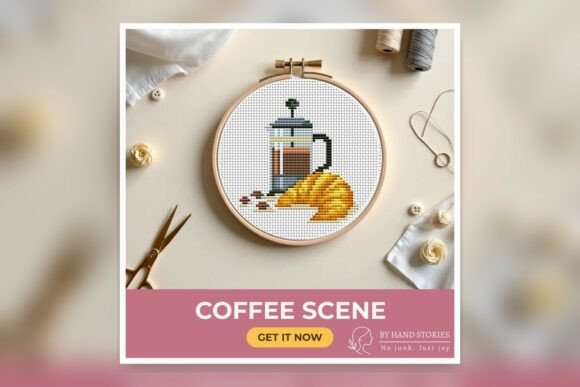
The design likely features detailed elements typical of a coffee scene—perhaps steam rising from a cup, beans scattered artistically, or a cozy mug resting on a wooden surface. This level of detail is excellent for creating a premium feel. It signals to the end consumer that the product is not mass-produced by a faceless corporation but curated by someone who values aesthetics. However, designers must be aware that "detailed" can sometimes mean "complex," which brings us to the practicalities of production.
Real-World Business Applications
So, where does Coffee Scene Cross Stitch Pattern PDF shine in a commercial context? My experience suggests several high-value applications:
- Embroidered Patches: This is perhaps the strongest use case. A well-executed coffee scene translates beautifully into a sew-on or iron-on patch. These patches can be sold as standalone accessories or attached to denim jackets, tote bags, and backpacks. They serve as a conversation starter and a badge of community for coffee lovers.
- Staff Uniforms and Aprons: For independent cafes or bakeries, branding staff attire is crucial. Instead of a generic logo, a subtle coffee scene embroidered on the chest pocket or the cuff of an apron adds personality without being overwhelming. It humanizes the service staff and reinforces the shop’s theme.
- Tote Bag Design: Canvas totes are a staple of retail merchandising. This design works exceptionally well here because the cross-stitch aesthetic complements the natural texture of canvas. It looks intentional and artistic rather than like a standard heat-transfer print.
- Cap Embroidery: While cap fronts have limited space, a simplified version of the scene or a focal element (like the coffee cup) can work as a charming accent on the side or back of a cap, appealing to a younger, trend-conscious demographic.
- Product Packaging Accents: Beyond apparel, consider using this design on hang tags, stickers, or even embossed labels for coffee bags. Consistency across all touchpoints builds trust and recognition.
Where Caution Is Required
Not every design fits every surface. As a designer, I advise clients to be wary of applying Coffee Scene Cross Stitch Pattern PDF to certain items without testing first. Small patch sizes can lose detail; if the design includes tiny text or fine lines, they may blur together when stitched at less than two inches wide. Similarly, curved surfaces like the front of a baseball cap require significant digitizing expertise to prevent puckering. Dark uniforms also present a challenge; unless you plan to use a substantial underlay or base fabric, the contrast might be lost. Always test on the actual fabric type before committing to a bulk order.
Impact on Brand Identity and Customer Trust
In the world of small business merch, visual consistency is key. Using a cohesive design system helps customers recognize your brand instantly. Coffee Scene Cross Stitch Pattern PDF offers a distinct visual signature that separates your products from competitors using generic clip art. When a customer sees this specific aesthetic on your tote bag, then again on your social media mockups, and finally on your physical product, it creates a loop of reinforcement. It tells them that you pay attention to detail. That attention to detail translates directly into perceived product value. Customers are often willing to pay a premium for items that feel handcrafted and thoughtfully designed, even if the final output is machine-stitched.
Practical Designer Notes for Production
Before you add this to your production pipeline, there are technical steps you must take. First, always test the design in black and white. This strips away color distractions and allows you to evaluate the composition and spacing. If the design looks cluttered in monochrome, it will likely struggle in full color.
Next, check the stitch density. High stitch counts can cause fabric distortion, especially on lightweight materials. Ensure you are using the correct stabilizer—heavy cut-away for hats and tear-away for temporary backing on garments—to maintain the integrity of the Coffee Scene Cross Stitch Pattern PDF. Inspect the thread color contrast carefully; what looks good on a bright monitor might wash out on beige cotton.
Finally, create a printable mockup for client approval. Show your customers how the design will look on their specific merchandise. This reduces returns and dissatisfaction. Also, confirm the commercial licensing terms explicitly. Just because you bought the file doesn't always grant you the right to sell unlimited quantities of the finished product. Verify these details to protect your business legally.
Final Verdict
Coffee Scene Cross Stitch Pattern PDF is a strong contender for small business owners looking to add warmth and character to their merchandise. It bridges the gap between traditional craft and modern retail needs. By understanding its strengths in patch and apparel applications, while respecting its limitations in size and complexity, you can leverage this design to enhance your brand identity and engage customers on a deeper emotional level. It is more than just a graphic; it is a tool for storytelling through thread.